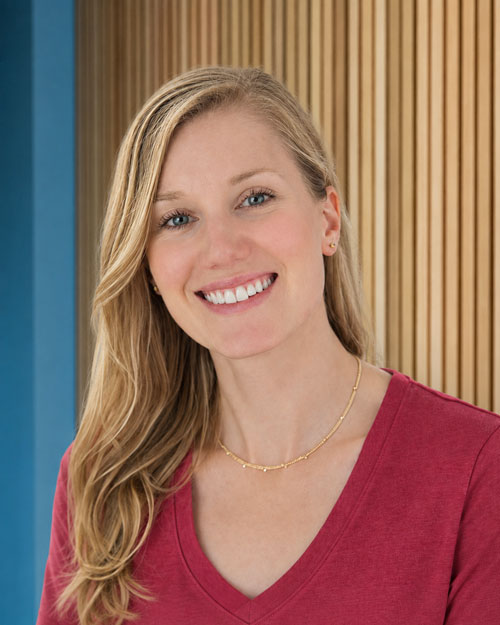
Beverly Strunk, MD

Psychiatrist
Beverly Strunk, MD
Dr. Beverly Strunk is a board-certified psychiatrist specialising in TMS and interventional psychiatry, with particular focus on treatment-resistant depression and on patients who have found limited benefit from medication.
- Doctor of Medicine, Loma Linda University School of Medicine, 2016
Dr. Beverly Strunk is a board-certified psychiatrist at Sollus Health whose work spans general psychiatry, interventional psychiatry, treatment-resistant depression and Transcranial Magnetic Stimulation. She treats adults living with depression, anxiety, trauma-related conditions and psychiatric symptoms that interfere with daily life, combining evidence-based medicine with care shaped around the individual person.
She earned her Doctor of Medicine at Loma Linda University School of Medicine and completed her psychiatry residency at Naval Medical Center San Diego. She served in the U.S. Navy Medical Corps from 2012 to 2024, attaining the rank of Lieutenant Commander. Following residency she was a staff psychiatrist and Head of the Mental Health Department at Naval Health Clinic Lemoore, where she also chaired the clinic’s Impaired Healthcare Provider Program.
Twelve years of military service have given Dr. Strunk extensive experience in military mental health care, including psychiatric Compensation and Pension evaluations for veterans through the Veterans Health Administration. That background gives her firsthand familiarity with the circumstances that can accompany military service and the transition from active duty to civilian life.
Since leaving active-duty practice her clinical work has included interventional psychiatry, general outpatient psychiatry, student mental health and psychiatric evaluations for veterans. For Dr. Strunk, psychiatry is the field that lets her combine medicine and neuroscience with a deeper understanding of each patient’s experiences, relationships and circumstances.
She was drawn to interventional psychiatry after seeing how many patients continue to struggle despite appropriate trials of medication and psychotherapy. TMS matters to her because it is noninvasive, generally well tolerated, and avoids many of the systemic side effects that come with psychiatric medications — offering an option for people who have not responded adequately to other treatments, or who found them difficult to tolerate. Within TMS she is particularly interested in individualised protocol selection, accelerated treatment approaches, and the emerging use of TMS for chronic pain and co-occurring mood symptoms. Her interventional experience also includes evaluation, treatment planning and clinical management for esketamine.
What she values most is seeing patients regain hope and begin functioning and enjoying their lives again — especially those who had started to believe nothing would help.
Alongside her work at Sollus Health, Dr. Strunk is a psychiatrist and educator at Point Loma Nazarene University, providing psychiatric care to students and teaching psychiatric nurse practitioners and counsellors. She is a member of the Clinical TMS Society and the American Psychiatric Association.
Outside the clinic she spends her time with her husband and their two young children. An avid equestrian, much of her free time goes to her horses and the other animals on her property, along with travelling and home and property projects.
Meet Beverly Strunk, MD
Approach to care
Dr. Strunk describes her approach as warm, collaborative, practical and evidence-based. She wants patients treated as individuals rather than as a diagnosis or a list of symptoms.
That begins with understanding what someone has already tried — what helped, what did not, what side effects they experienced, and what they most hope to regain through treatment. Patients do not need to arrive with everything perfectly organised, or knowing which treatment they need. Her role is to listen, clarify what is happening, explain the available options, and help build a thoughtful plan.
She believes excellent mental health care requires clinical expertise, careful listening, honest communication, and a willingness to reconsider the plan when something is not working. After a first appointment, she hopes every patient leaves feeling heard, respected, better informed and more hopeful about the path forward.
Patients deserve to feel genuinely heard and understood — not reduced to a diagnosis.