

TMS Therapy for Panic Disorders
BREAKTHROUGH TECHNOLOGY
Unlock Lasting Relief from Panic Disorder
A panic attack can happen anywhere, anytime: your heart pounds, your chest constricts, and terror floods through you without warning. These episodes leave many people trapped in constant fear, unable to maintain their careers, sustain relationships, or complete routine tasks. At Sollus Health, we offer TMS treatment as a non-invasive option for individuals who haven't found adequate relief through traditional approaches.
-
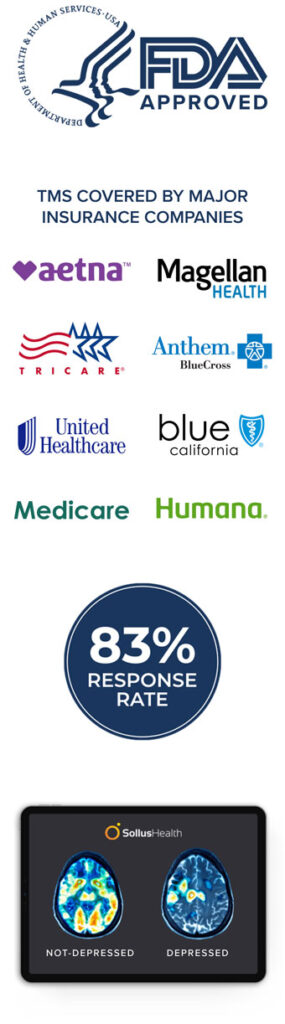
Covered by Insurance
-
FDA Approved
-
Covered by Insurance
-
FDA Approved
TMS Therapy
What is Panic Disorder?
Panic disorder is a serious anxiety disorder that causes recurring, unexpected panic attacks: sudden episodes of intense fear that peak within minutes and often feel like a heart attack or impending death. During a panic attack, the body's fear response activates even when no real danger exists. Common symptoms include racing heartbeat, chest pain or tightness, shortness of breath, dizziness, sweating, trembling, numbness or tingling sensations, feelings of unreality, and fear of losing control or dying.
After experiencing panic attacks, individuals develop intense fear about having future episodes. This anticipatory anxiety leads to avoidance behaviors: staying away from places, situations, or activities where attacks have occurred or might happen. Some people become increasingly isolated, unable to leave home, drive, or participate in social activities.
Without proper intervention, panic disorder significantly impairs quality of life. Relationships suffer, careers stall, and the constant vigilance required to avoid potential triggers becomes exhausting.
Traditional Approaches to Panic Disorder
Mental health professionals typically recommend several standard options for managing panic disorder. Cognitive Behavioral Therapy (CBT) helps patients identify catastrophic thinking patterns and develop healthier responses to anxiety triggers. This evidence-based approach teaches coping strategies and gradually exposes individuals to feared situations in controlled settings.
Medications are another common avenue. Selective serotonin reuptake inhibitors (SSRIs) and serotonin-norepinephrine reuptake inhibitors (SNRIs) serve as first-line pharmaceutical options. Benzodiazepines may provide quick relief during acute panic episodes but carry risks of dependency with long-term use.
Why Standard Options Don't Always Work
Despite the availability of these established methods, many people with panic disorder struggle to find adequate relief. Common side effects, including weight gain, sexual dysfunction, gastrointestinal problems, and emotional blunting, cause many individuals to discontinue medication even when it provides some benefit.
Some people work with therapists for months but continue experiencing frequent, severe panic attacks. Others can't afford ongoing sessions or live too far from specialized providers. When standard approaches fail, finding effective help feels impossible.
How TMS Treatment Works for Panic Disorder
Transcranial Magnetic Stimulation (TMS) treatment takes a different path. Instead of introducing chemicals that circulate throughout your body, TMS delivers focused magnetic pulses to the exact brain areas that control fear and emotional responses. The FDA approved this non-invasive procedure for major depressive disorder in 2008, and subsequently for obsessive-compulsive disorder and anxiety symptoms in treatment-resistant depression.
The procedure delivers precisely targeted magnetic pulses to nerve cells in the brain. These pulses pass painlessly through the skull to reach the dorsolateral prefrontal cortex (DLPFC), a region that plays a central role in emotional processing and behavioral control. In individuals with panic disorder, disrupted communication between the DLPFC and the amygdala (often called the brain's fear center) contributes to exaggerated threat responses and panic symptoms.
Targeting the Neurological Roots of Panic
Think of panic disorder as faulty wiring in your brain's alarm system. The amygdala sounds the alarm for danger even when no threat exists, while the prefrontal cortex fails to properly regulate this fear response. TMS treatment works by strengthening the connection between these areas, helping restore normal communication patterns.
The magnetic pulses stimulate neurons to fire in targeted regions, gradually modifying neural circuits over multiple sessions. This process, called neuroplasticity, allows the brain to form new connections and pathways. Over time, the prefrontal cortex regains its ability to calm the amygdala's overactive fear signals, reducing both the frequency and intensity of panic attacks.
While using TMS to treat panic disorder specifically remains an off-label application, this simply means the FDA has not yet approved it for this specific condition despite strong evidence supporting its use. Many psychiatric clinics, including Sollus Health, offer TMS treatment for panic disorder based on extensive research demonstrating its safety and effectiveness for related anxiety conditions.
Related: See how TMS therapy may help relieve tinnitus symptoms.
Research Supporting TMS for Panic Disorder
Several research teams have tested TMS treatment specifically for panic disorder with encouraging results. One study found that patients receiving repetitive transcranial magnetic stimulation (rTMS) to the right dorsolateral prefrontal cortex experienced substantial symptom relief compared to those receiving inactive stimulation.
Longer studies reveal continued gains over time. After four weeks of TMS sessions, half of participants in one clinical trial reported meaningful improvement. Two months into the protocol, 67% noted fewer panic attacks and less constant worry about the next episode. These improvements remained stable at six-month follow-up assessments, suggesting lasting changes in brain function.
The evidence base is particularly robust for anxious depression (major depressive disorder accompanied by significant anxiety symptoms). The FDA approved TMS treatment for anxious depression in 2021. Since panic disorder involves many of the same brain circuits, the extensive research in that area strengthens the case for using TMS treatment to address panic symptoms.
Related: Understand how TMS therapy supports bipolar disorder treatment.
Benefits of TMS Treatment for Panic Disorder
TMS provides several distinct advantages for individuals struggling with panic disorder, particularly those who haven't achieved adequate relief through conventional approaches. The non-invasive nature of this treatment means no surgical incisions, no implanted devices, and no systemic effects on other body systems.
Freedom from Medication Side Effects
Many people pursuing TMS treatment have spent months or years managing difficult side effects from psychiatric medications. SSRIs and SNRIs commonly cause weight gain, sexual dysfunction, drowsiness, and gastrointestinal distress. Benzodiazepines, while effective for acute panic, carry risks of dependency and cognitive dulling with regular use. TMS eliminates these concerns entirely, offering a drug-free path to symptom relief.
Lasting Improvements
While medications work by altering neurotransmitter levels throughout the brain, TMS directly modifies the neural circuits that generate panic symptoms. By strengthening these connections through neuroplastic changes, TMS treatment can produce lasting improvements that persist long after the course of sessions ends.
Many patients report benefits beyond reduced panic attacks:
- Improved sleep quality and fewer nighttime awakenings
- Better concentration and mental clarity during the day
- Enhanced mood and decreased general anxiety
- Greater confidence in facing situations previously avoided
- Restored ability to participate in work, social activities, and hobbies
TMS treatment works well alongside other interventions. Patients often find that therapy becomes more effective after beginning TMS sessions. The reduction in overwhelming anxiety makes it easier to engage with CBT techniques and exposure exercises.
Who Benefits from TMS Therapy for Panic Disorder?
TMS treatment at Sollus Health serves individuals who continue experiencing significant panic symptoms despite trying other approaches. You might be an excellent candidate if you've worked with psychiatrists or therapists but still struggle with frequent panic attacks that limit your daily functioning.
Treatment-resistant panic disorder represents the primary indication for pursuing TMS treatment. This includes people who've tried several different SSRIs or SNRIs without achieving sufficient improvement, as well as those who've completed a full course of CBT but continue having breakthrough panic attacks.
You may particularly benefit from TMS treatment if you:
- Experience intolerable side effects from panic disorder medications
- Prefer avoiding pharmaceutical approaches due to pregnancy, nursing, or personal preference
- Have medical conditions that complicate medication management
- Struggle with both panic disorder and depression simultaneously
- Want to enhance the effectiveness of ongoing psychotherapy
The co-occurrence of panic disorder with major depression makes TMS especially appropriate, as extensive research supports its effectiveness for this combined presentation.
What to Expect During TMS Sessions
We've designed our TMS protocols to be both effective and comfortable. Our Carlsbad clinic provides a calm setting where experienced technicians deliver each session with genuine care and attention.
Your Initial Mapping Session
Your first appointment lasts approximately one hour and involves a mapping process in which our team determines the optimal coil placement and stimulation intensity tailored to your individual needs. This personalized approach accounts for variations in head size and shape, ensuring precise targeting of the brain regions most relevant to your symptoms.
Regular Sessions
After that initial mapping, your appointments follow a predictable rhythm. Most sessions run between 20 and 40 minutes, though your psychiatrist may adjust the duration based on how you respond. You'll receive sessions five days per week for four to six weeks.
Here's what happens during each session:
- You'll sit comfortably in a state-of-the-art Apollo chair while wearing protective earplugs
- Our technician positions the magnetic coil at the predetermined location on your head
- The device activates, delivering magnetic pulses in a rhythmic pattern
- You'll hear a clicking sound and feel a tapping sensation on your scalp
- You remain fully awake and alert throughout the session
- After the pulses stop, you can immediately resume your normal activities
Side Effects and Tolerability
Most patients tolerate TMS well, with minimal side effects. Some individuals experience mild scalp discomfort or headaches during or shortly after early sessions, but these typically diminish as your body adjusts to the stimulation. Temporary tingling or twitching of facial muscles may occur during pulse delivery, but stops immediately when the session ends.
Unlike medications or electroconvulsive treatment, TMS requires no anesthesia and causes no memory problems or cognitive impairment. You can drive yourself to and from appointments, work the same day, and maintain your regular schedule. Most people begin noticing improvements in their symptoms within two to four weeks of starting treatment.
Why Choose Sollus Health for TMS Treatment in San Diego
Sollus Health is a specialized psychiatric clinic in Carlsbad serving patients throughout North County San Diego, including Oceanside, Escondido, San Marcos, Vista, and Encinitas. Our board-certified psychiatrists customize every aspect of your care to deliver precise, comfortable sessions. We build each plan around your particular symptoms, what you've already tried, and how your body responds to the treatment. Our staff includes only people who genuinely care about patients and know how to listen. They'll walk beside you through every step of this process.
Insurance approval for newer therapies can be confusing. Our staff handles the complex parts, like checking what your plan covers, requesting authorization from your insurer, and submitting the required paperwork. For patients whose insurance doesn't cover TMS for panic disorder or who prefer self-pay options, we offer transparent pricing and flexible payment plans to accommodate various income levels.
From your initial free consultation through the completion of your treatment course, you'll receive consistent, compassionate guidance focused on your individual needs.
Take the First Step Toward Relief
Living with panic disorder doesn't have to mean accepting a life limited by fear. TMS treatment offers hope for individuals who've struggled to find adequate relief through traditional approaches, providing a path forward that targets the neurological roots of panic symptoms without the side effects of medication.
At Sollus Health, our experienced team is ready to evaluate whether TMS might help you reclaim your life from panic disorder. Contact us today at 619-649-6658 to schedule your free consultation.
YOUR QUESTIONS ANSWERED
Frequently Asked Questions



Can't find what you're looking for? Get in touch with our team and we will gladly help out.
TMS treatment does not yet have FDA approval specifically for panic disorder, and this off-label use is supported by emerging research evidence. The FDA has approved TMS for major depressive disorder, obsessive-compulsive disorder, and anxiety symptoms in treatment-resistant depression.
Yes, TMS works safely alongside ongoing psychotherapy and most psychiatric medications. Many patients find that combining approaches produces better results than any single intervention alone.
TAKE THE FIRST STEP TODAY
A Simple Process to Begin Your TMS Journey
Take the first step toward lasting relief from depression with TMS therapy, a non-invasive, medication-free treatment designed to restore your well-being.
Break free from depression
Our team is here to guide you through a personalized journey to reclaim your mental health and regain control of your life.